
Fake-screen it until you make it
My first objective when joining a team is to make a master concept called a fake screen to direct the team toward a precise and feasible art style. It's the cornerstone of how I work as an art director.
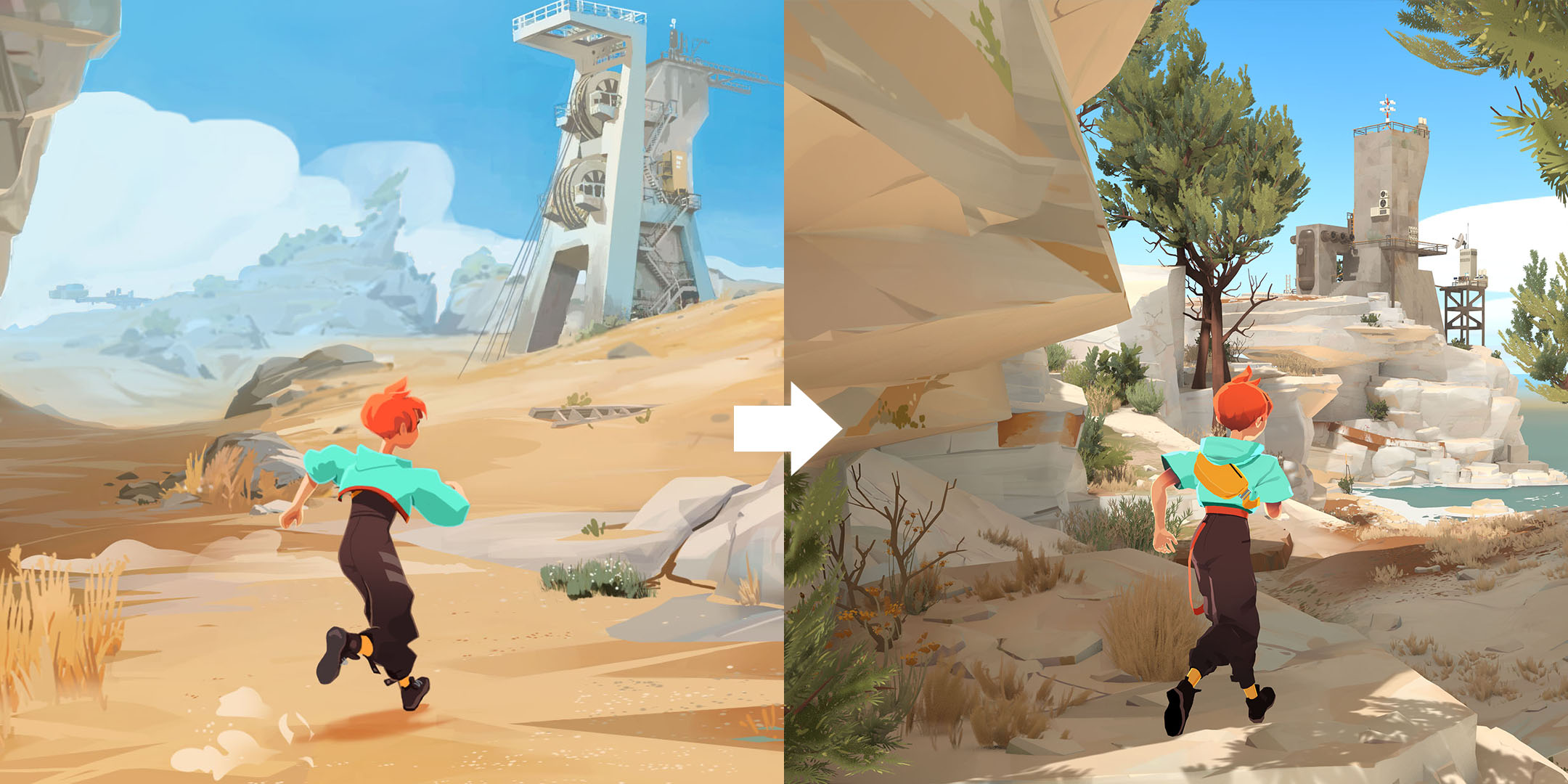
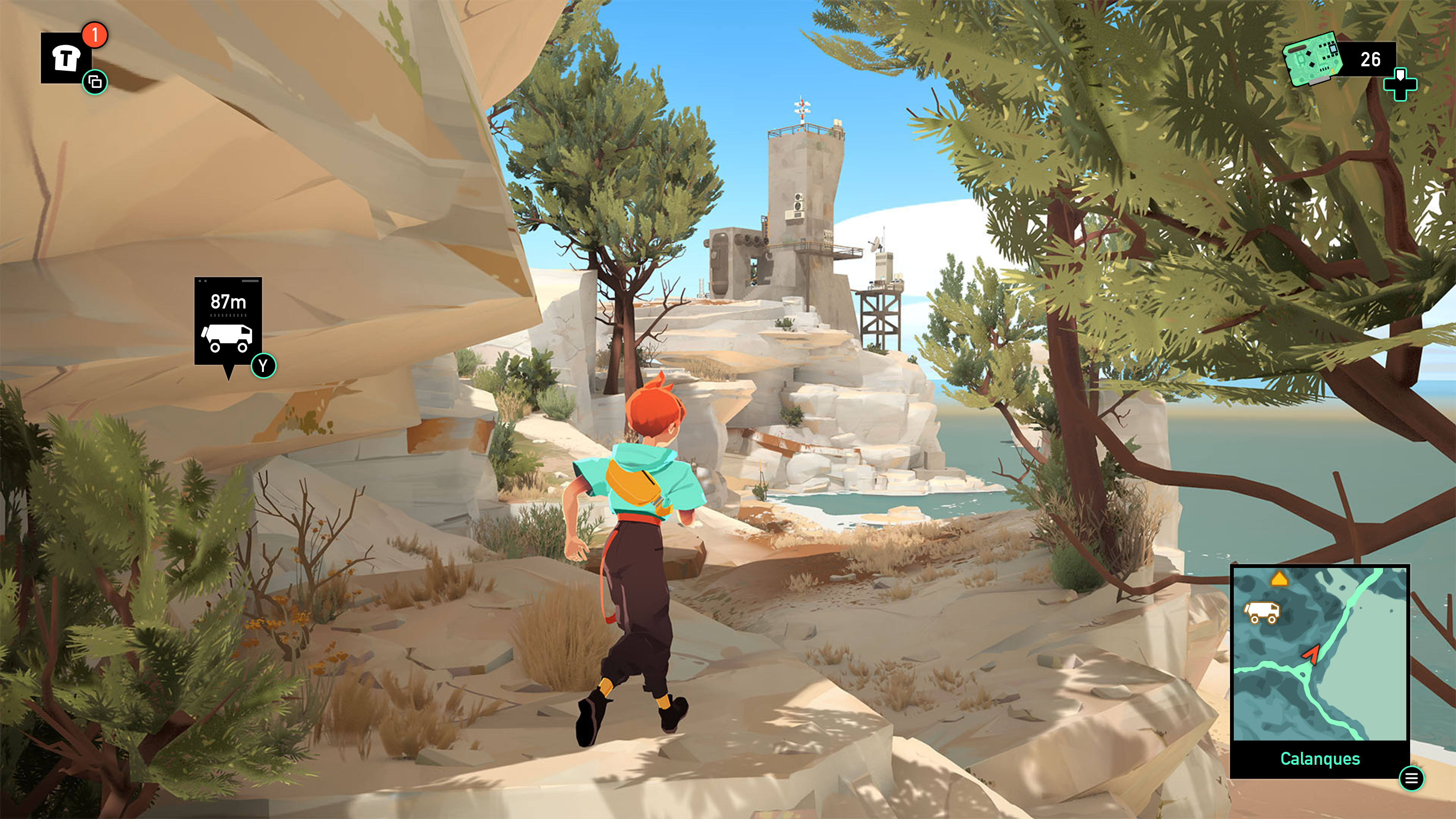
This white arrow is 2 years of work. The first is a 2D painting at the start of a project. The second is a screenshot of the final game, in Unreal. Their resemblance is an accomplishment!
So let’s see why I make fake screens, and what are the challenges around their creation. We'll look at the one I made for Caravan SandWitch.
The problem
No matter how hard someone tries to delineate an art style with written guidelines, reference boards or even environment and character concepts, the problem persists: there's a always room for interpretation. In front of a multitude of incomplete concepts, it's hard to see a unique picture. Everybody will have their own idea of what the end game will look like.
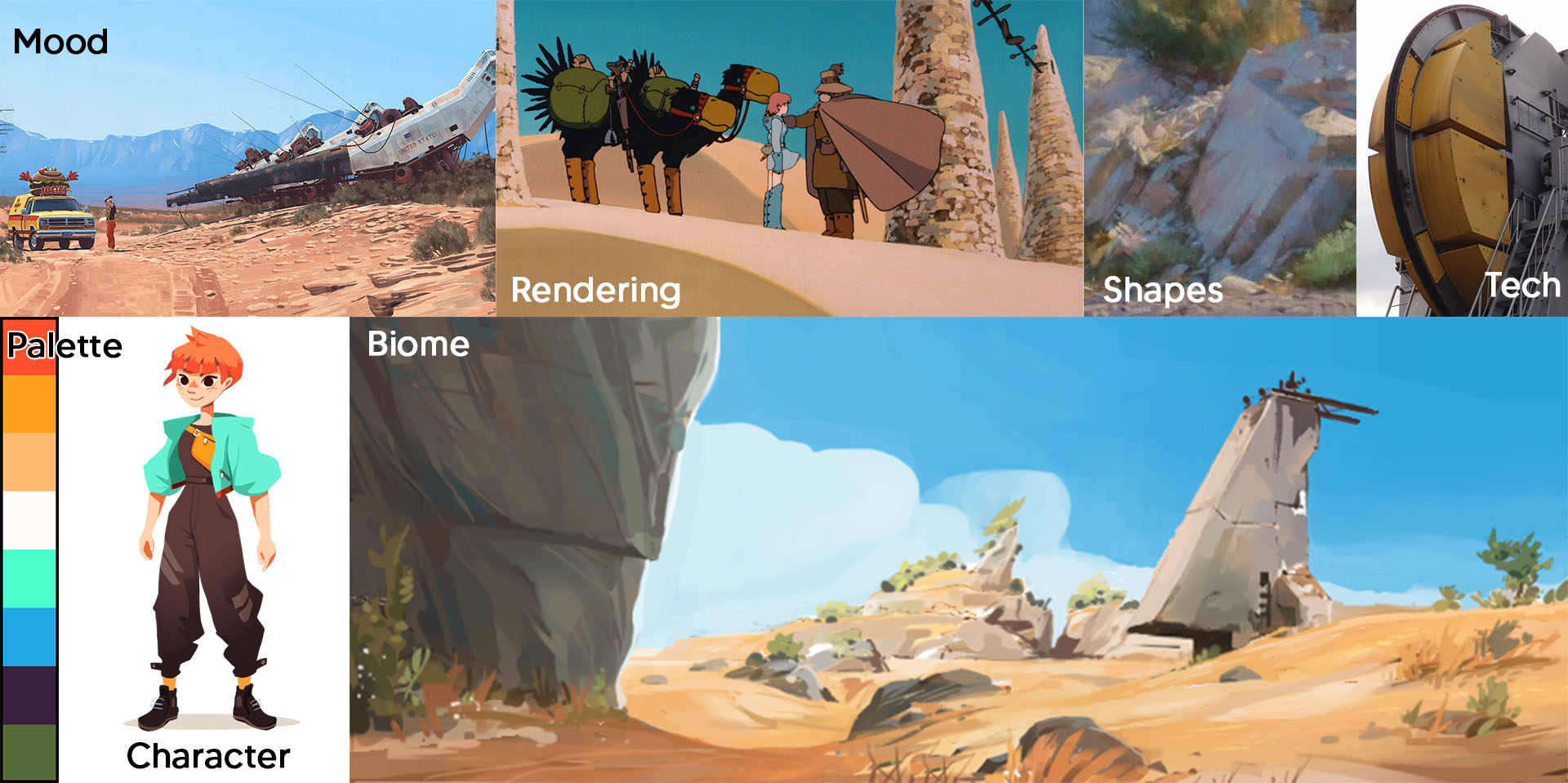
And it's understandable. Making a game is an immense endeavor, with lots of interependent artistic and technical choices. It's hard to see everything all at once.
But it's possible.
So instead of focusing on specific parts - like the main character or the color palette - you gotta take it all in one piece. Resolve all the problems at the same time, by putting all the pieces together.
A concept to rule them all
Art direction is easier with one ground of truth: a master concept summing up everything, a fake screenshot of a key moment. By working on a fake screenshot, I tackle the real problem: how will the game look, at the end, through the camera? What is a defining gameplay situation and how the art style can build upon it? These are the real questions I need to answer.
A good fake screen allows the whole team to see the final game, and answer confidently to all the questions.
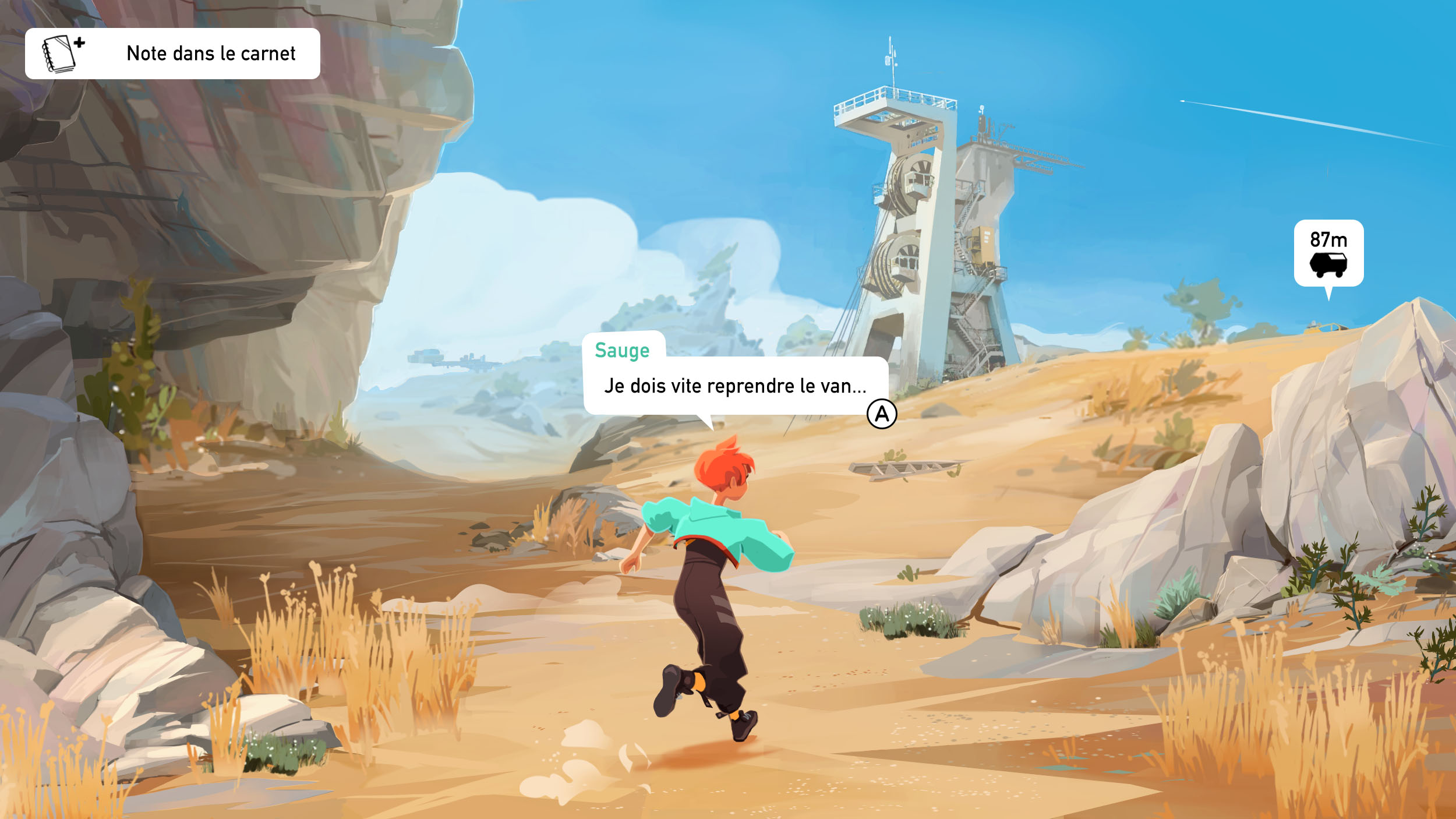
This is the fake screenshot I drew at the end of pre-production. It's the result of combining the previous concepts and refs we agreed upon, and iterating a few times until everything supports the project ambitions and is a coherent all.
- TPS camera with low FOV, for a contemplative mood
- vertical industrial ruins, easy to spot, climbable
- horizontal compositions with dunes and rocks
- short lines of sights to stimulate wandering
- low contrast environment,high contrast characters
- cell-shading characters to pop out
- focus on emotion with big heads and bubble dialogues
- vibrant color palette for a joyful post apocalypse
- colored fog to help readability but stay in palette
- bold and broad brush strokes to imply material qualities
- low detailed textures and models
- limestone cliffs, dry foliage
- Cold, sci-fi HUD, constrasting with the rest
- footstep FX, style of animation, etc.
To sum up:
Caravan SandWitch will be a hopeful sci-fi exploration game, with a contemplative mood and some vertical industrial ruins to climb upon. The setting will be harsh, characters will pop, but the vibe will remain soft.
With a fake screen like this one, I see that every design choices work together. The result is aligned with the core pillars of the project, and stands out from the current indie games. And I'm confident the team can pull this off.
Aiming for the moon?
A fake screen needs to be as precise, as honest and as ambitious as you can make it. If it gets all these, then it’s just, well, a matter of iterating towards it!
Be honest
Show a realistic gameplay moment. It doesn't have to be exciting nor impressive. The goal of a fake screen isn't to sell a game pitch to potential investors or players. It has to be honest rather than bombastic. So get a typical game situation. It really needs to be as close as a screenshot of the final game. Correct perspective, needed HUD, everything.
It's easier to do this by working from a base. Is there a prototype already worked out, on which you can paint over? It should! Have a prototype before thinking about art style! I typically do this: I launch the prototype from the game engine editor, look for a demonstrative situation, pause the game and fiddle with camera params directly. Then I take a screenshot to paint over.
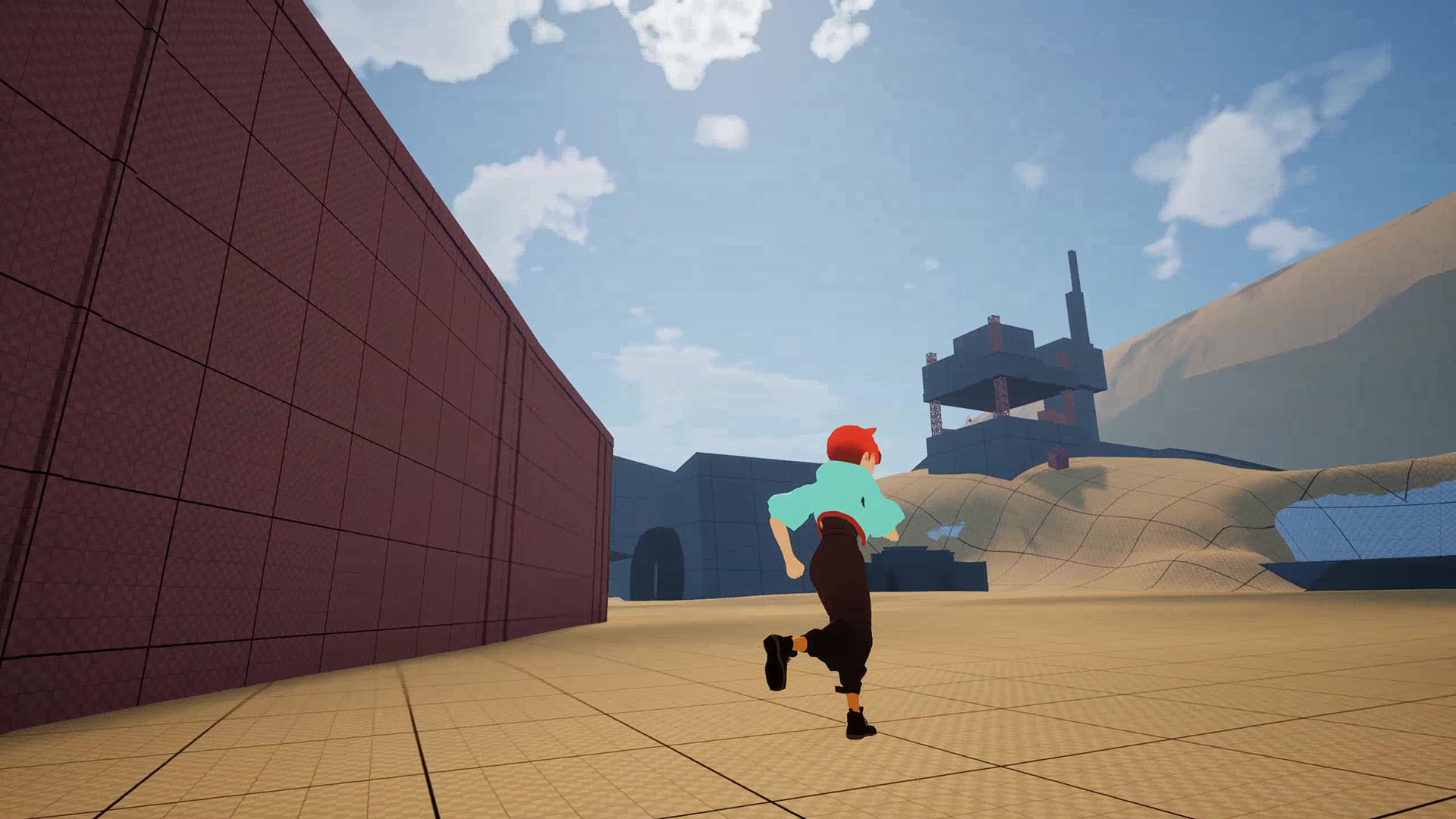
My way of working and thinking about art is through Photoshop, a 2D painting program. I think in 2D, and I bang my head at doing the same in 3D afterwards. It's my process, I need to have complete control on the colors and shapes, and I have painting skills. If you're confortable with 3D, you can totally iterate on a 3D scene to start.
But be wary! Stay as true to the game camera as possible. Don't go inventing a weird camera angle that won't be in the final game. Games often need to have a wide camera angle, to get a sense of the immediate space around the avatar. But wide angles are ugly, that's a fact. They distort everything. A 70mm is much more pleasing. Will your game be able to have a telephoto camera during gameplay moments? Be honest!
One way to be honest is to add HUD to the paintover. It will ground the concept into something more believable. And it's nice to think about its synergy with the rest. UI is a big part of every game!
Be ambitious
A fake screen is the promise of the final result. So it's time to be honest and ambitious! Don't feel required to lock yourself in a known rendering style. Try some stylized lighting, bold shapes, impressive rendering... What you think is needed to support the game pillars and make your game unique. But know your team strengths and shortcomings. Build the style with the team in mind. Don't overpromise. Be sure to set a style you can deliver.
The team of Caravan SandWitch was a small group of junior folks working remotely. While we set out to make a unique 3D style, it would also need to save time: simplified volumes, low detailed textures, and reduced but adaptable materials.
I didn't know exactly how we would achieve everything that was present in the fake screen, but was confident nonetheless. There was enough technical knowledge in the team, and time for R&D.
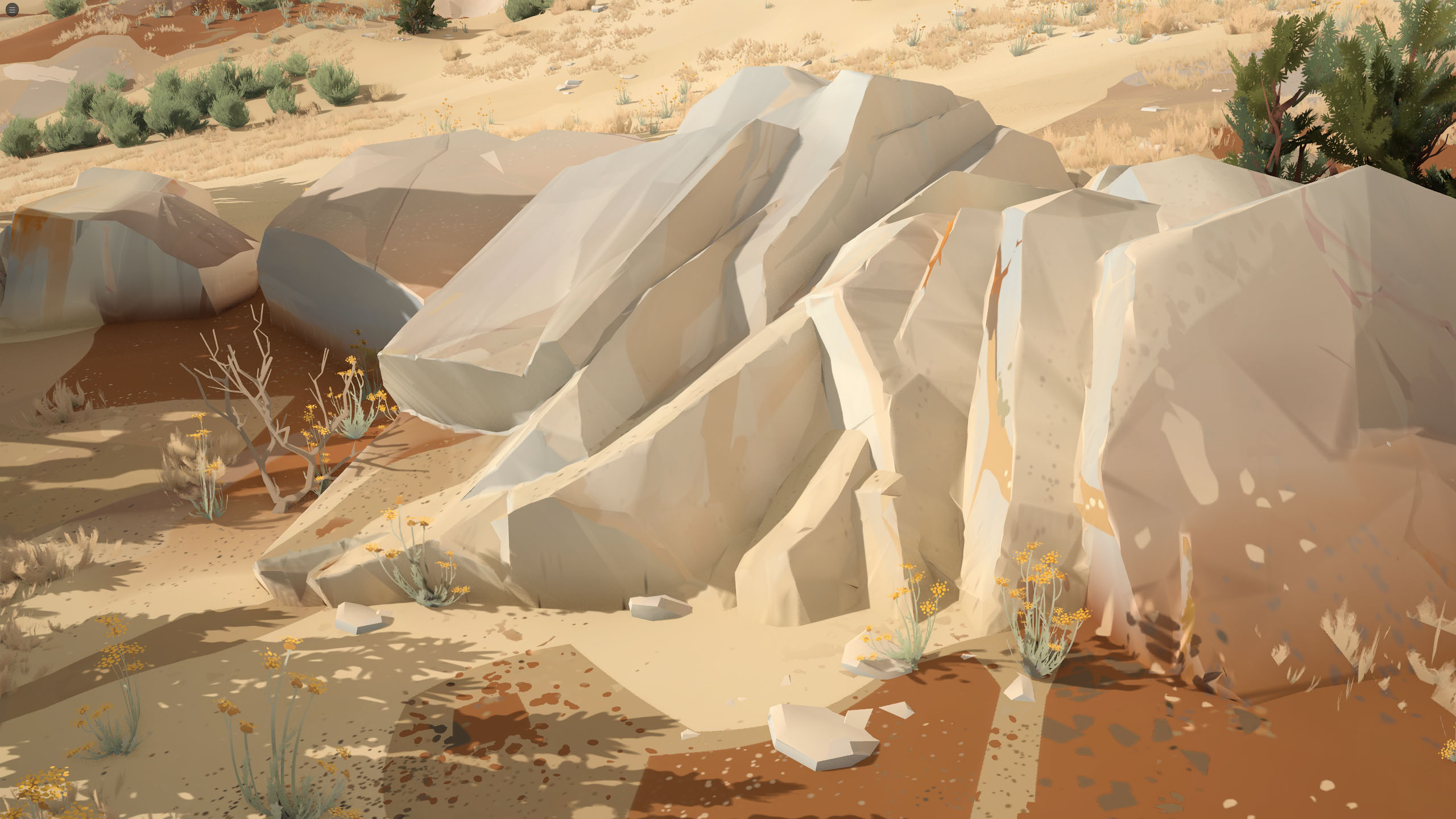
At some point, the 3d modeler came to say they were afraid of the cool but complex rocks I was painting. How would they model it, they had no idea, besides maybe spending days in zbrush? They were afraid of the amount of work. Was it worth the trouble? Couldn't I propose simpler rocks??
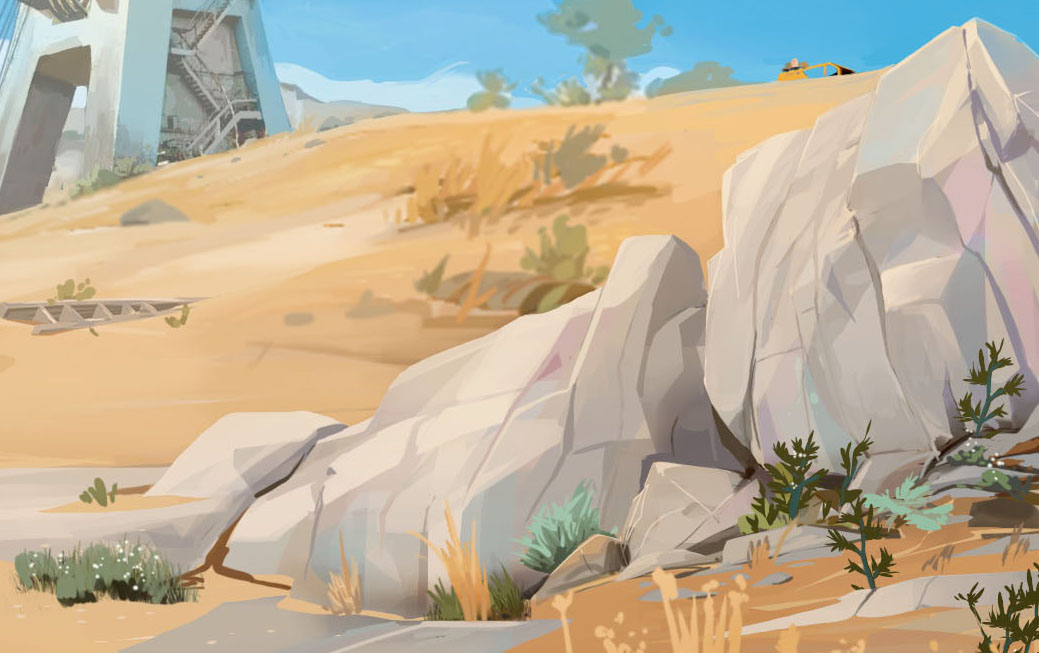
I had seen a post recently showing how a tech artist constructed rocks with an impressive fluency, by combining simpler shapes. We quickly tried the trick ourselves and had nice results. It was enough to be confident in our ambitious rocks. In the end, the rocks we arrived at are unique, pretty, and quite faithful to the original concept.
Be precise
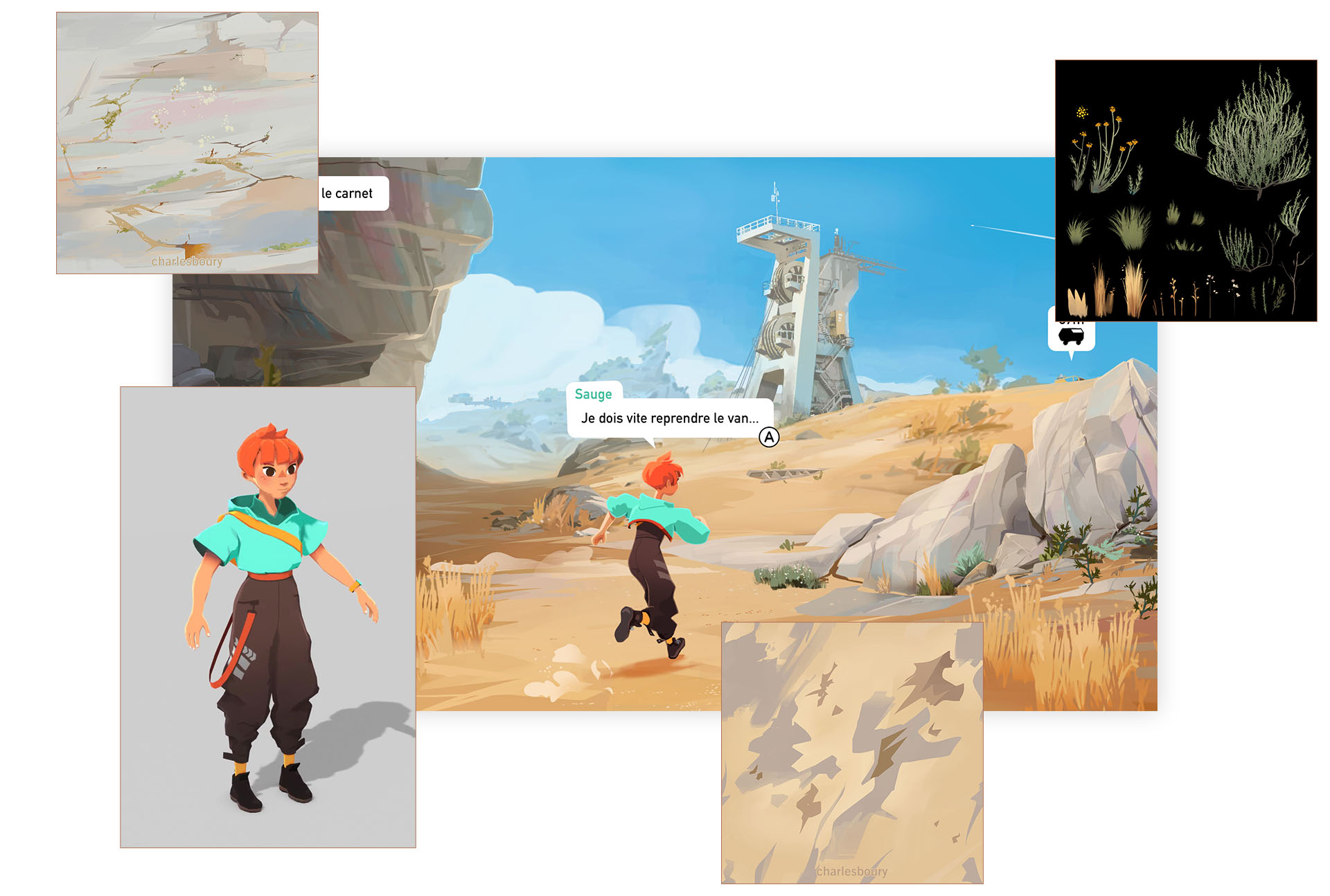
Because a fake screen is used as a master concept to follow, it can act as a source when producing assets. When done well, it's easy to extract information from it.
When I had to make the 3D textures for the props and terrain, I used the same brushes. I even started by cutting a part of the fake screen, use it as a base. The color palette was created by using a color picker, directly from the fake screen. The cel-shading we created for characters was built with the fake screen as the primary lookdev reference. We didn't need more refs.
By being precise, you'll reduce the amount of questions later.
Be Persistent
Iterate, iterate, iterate. That's the key. I have one tip to help on this: set up scenes for art direction.
But more broadly, it's a matter of looking at discrepancies between the current game state and the fake screen, and clear them.
After each milestone, I took screenshots and compared them to the fake screen. I noted the most obvious deviations, decided to resolve them or not, and set new goals. We continued until the 3d rendering was close enough to what we envisioned, just before polish phase.
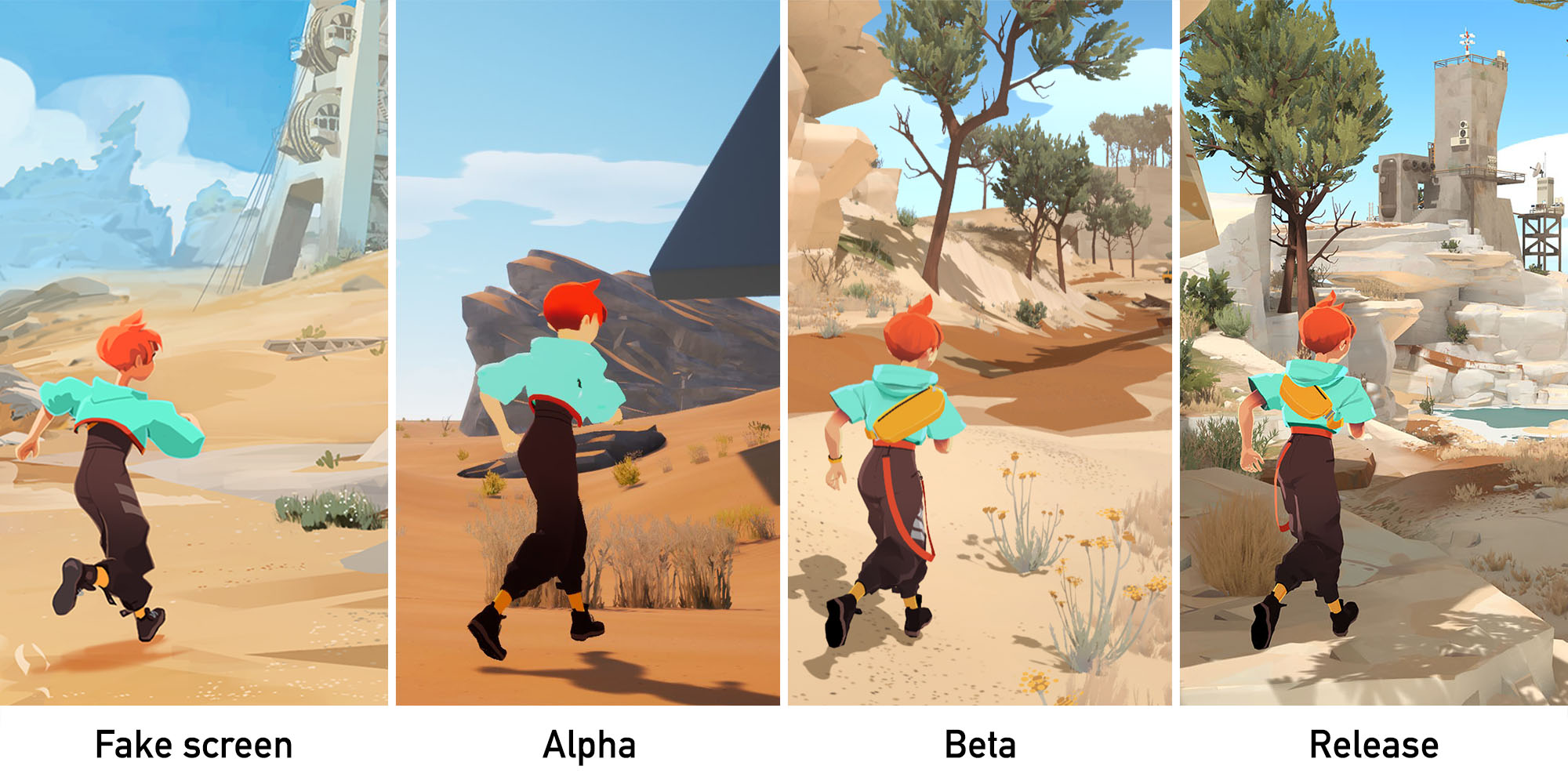
It was a reassuring process, to see that we were closer and closer to something we were aiming from the beginning. Sure, the art team had to work on more than a 3D transposition of a concept. We deployed the entire content of a narrative-exploration mini open-world. But for each new character, each new biome, we could lean on the fake screen as a standard to follow.
In the end, the team arrived at something rich, deep and different.
Conclusion
Take the time to make a fake screen during pre-production. It will be a great tool to solidify the vision of the game. It will force you to test if everything planned for the game work out in unisson and create a defining, feasible style.
Debate it with the other leads, to arrive at something for which everyone is on board. Have a chat with your tech artist, your game designer, you sound designer, your community manager, everyone. During production, use it as a beacon, one in which the team can be confident, and eager to go toward.
And if a fake screen isn't the right fit the project, apply the principle nonetheless! When vibes are more important than art, you need more than a still image. Some game studios make fake trailers. Some, like the Game Bakers, go so far as to make a fake gameplay footage to better understand their project.
I hope to see more fake screens in the wild!